That would be a great title for a mystery involving the vintage trade.
I was nosing around to find a few Albert Campion titles (author: Margery Allingham) and stumbled over a Golden Age Mysteries forum, but it won't let me post. It got me to thinking again about writing a mystery, and of the ones I like to read.
Here are some of my favorite "golden age" authors, in no particular order.
Sayers (Lord Peter Wimsey)
Christie (Tommy & Tuppence, Poirot and non-series are my favorites)
Stout (Nero Wolfe)
Allingham (Albert Campion).
There are a few present day authors who write historical mysteries set in the 20s and 30s.
Jill Churchill (Grace & Favor series)
Kerry Greenwood (Phryne Fisher)
Carola Dunn (The Hon. Daisy Dalrymple)
The later aren't on an even footing with the real thing. Hindsight can ruin a good book (!) but I enjoy them, if only because I'd like to think I could do as well.
"Deadstock", by the way, is term used to describe "old/new" items. In other words, something vintage or antique that has never been used, and might even still have the original sale tags.
Showing posts with label Dorothy L. Sayers. Show all posts
Showing posts with label Dorothy L. Sayers. Show all posts
Thursday, February 05, 2009


Tuesday, November 25, 2008
Austen and Sayers and Wodehouse
Oh, my.
I've been reading a lot of P.G. Wodehouse lately. I've also been dipping into books about him, and in so doing, I noticed that he appeared to have borrowed a few names from Miss Austen. Bingley and D'Arcy (Darcy), no less.
His style influenced so many people and writers, too. That is, the knuts and others whom Wodehouse kept alive in his time live on now because of his brilliant way of turning a stereotype into a character that fascinates.
Dorothy L. Sayers was a scholar, in every way. But she loved humor, and it shows in the Lord Peter Wimsey books. (Wimsey, for heaven's sake, as a surname.) For the most part she keeps it subtle, barring the opening of the first book, but she can't resist letting a character describe Lord Peter in Murder Must Advertise as "Bertie Wooster in horn-rims". He's in disguise, thus the glasses.
One of the slackers hanging out in the secretaries' offices is reading Wodehouse, too. Even immediately after Peter is at his most serious some of Bertie's mannerisms will creep in; I love that.
I think it's time to re-read the Wimsey canon chronologically again.
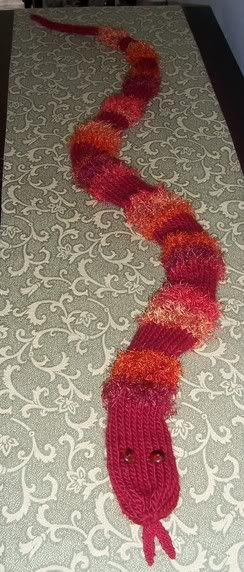
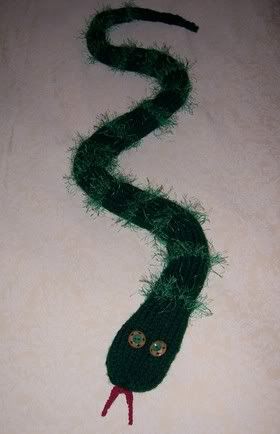
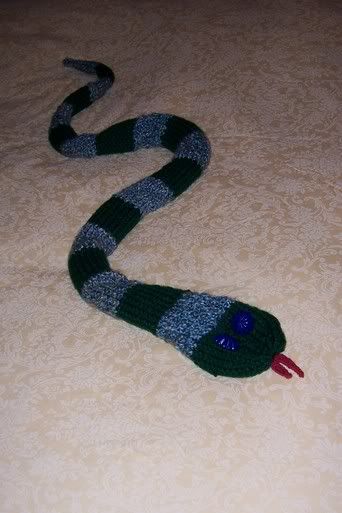
In even more frivolous news, I present you with a sample of my contribution to the ornament exchange:

Subscribe to:
Posts (Atom)